
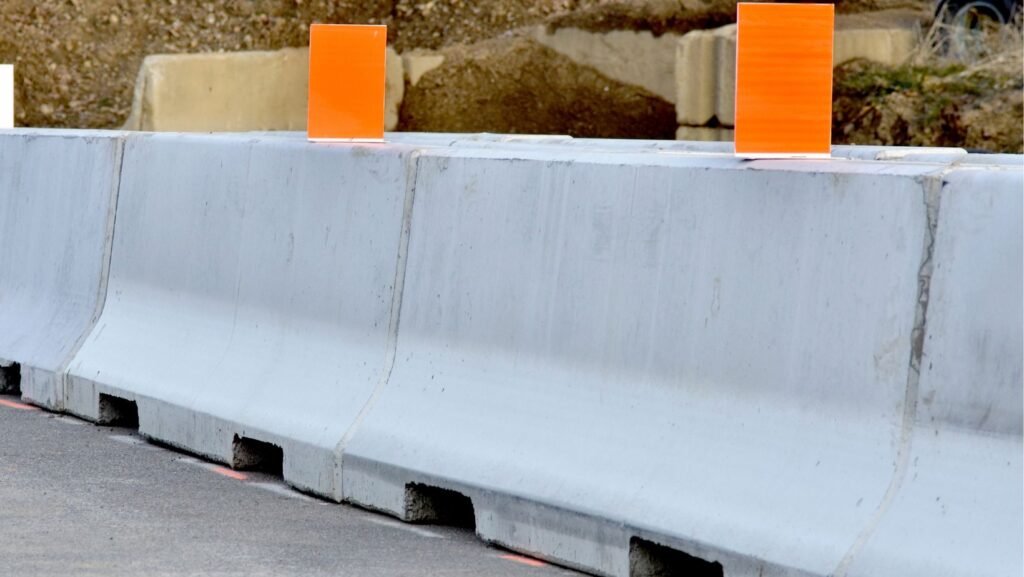
Construction zones face constant exposure to traffic, heavy machinery, and unpredictable conditions. In these high-risk areas, safety measures must rise to meet serious challenges. Concrete barriers provide proven protection by separating work zones from hazards, reducing collisions, and limiting damage. Their structure and strength allow them to serve as dependable safeguards in some of the most demanding environments.
Across highways, city streets, and large-scale projects, these barriers support secure and more organized worksites. They not only protect workers but also help control vehicle movement and prevent accidents. Understanding their benefits shows why they continue to play a central role in construction safety across the world.
- Exceptional impact resistance against vehicle collisions
Concrete barriers absorb and redirect heavy impacts that occur during vehicle collisions. Their solid mass and tested shapes help reduce the force transferred to vehicles and nearby workers. This feature makes concrete barriers for construction safety an effective option in work zones where vehicles move close to crews or equipment.
Engineers design these barriers to control the direction of impact rather than stop a vehicle abruptly. The sloped or curved faces, such as those on Jersey-style barriers, help keep vehicles upright and prevent rollovers. As a result, barriers protect both drivers and on-site staff from serious harm.
Concrete’s density and weight also allow these barriers to stay in place even after multiple collisions. They resist cracking under pressure, which makes them suitable for long-term use in high-risk construction areas. This durability lowers replacement costs and supports safer work environments over time.
- Effective physical separation between traffic and work zones
Concrete barriers create a strong physical divide that keeps vehicles away from work areas. They act as a solid boundary that clearly marks where drivers can and cannot go. This separation reduces confusion and helps maintain a smooth flow of traffic near construction zones.
These barriers protect workers who carry out tasks close to active roadways. By preventing vehicles from entering work areas, they reduce the chance of collisions. In busy highway projects, that layer of protection often makes a clear difference in safety outcomes.
In addition, the fixed placement of concrete barriers gives both drivers and crews a clear sense of order. Drivers follow defined lanes, while crews work without constant concern for stray vehicles. As a result, construction activity continues more efficiently, with fewer interruptions and a lower risk of injury.
- Durability suitable for high-speed and heavy vehicle environments
Concrete barriers stand up well to the harsh demands of high-speed traffic and heavy vehicles. Their strength helps absorb and resist the force of powerful impacts. This makes them dependable for highways, major intersections, and sites where large trucks travel regularly.
They last longer than metal barriers because they do not bend or corrode easily. As a result, maintenance needs drop, and repair costs remain low. Concrete’s weight and density also keep it in place even under repeated stress.
Engineers often design these barriers with high-performance mixes that improve strength against both collisions and weather. In areas with frequent truck traffic, this design choice helps maintain stability and safety over time. Therefore, concrete barriers give construction zones and highways steady protection under tough traffic conditions.
- Ability to Redirect Vehicles and Minimize Accident Severity
Concrete barriers serve as strong physical boundaries that guide vehicles away from hazards. Their shape and weight help keep cars within the roadway, reducing the chance of crossing into opposing lanes or striking solid objects. This redirection can lower the risk of dangerous secondary collisions.
The design also helps absorb some of the crash force. Instead of a vehicle striking a fixed obstacle, the barrier spreads the impact energy along its surface. As a result, passengers face less severe forces, which can reduce injuries in many crash situations.
Proper installation improves these results even further. Barriers with connected sections provide consistent resistance, allowing vehicles to slide along the surface rather than stop abruptly. This steady control helps drivers regain stability and prevents the vehicle from rebounding into traffic.
By guiding movement and reducing impact strength, concrete barriers make high-risk areas safer for both workers and drivers.
- Versatile applications including urban and military construction sites

Concrete barriers serve many functions across different work zones. In urban construction areas, they separate traffic from workers, which helps reduce accidents. They also guide vehicles through temporary lane shifts and protect pedestrians near active projects.
These barriers adapt well to crowded city settings. Their modular design allows crews to move and arrange them easily for short-term or long-term use. City planners value their strength and ability to create clear boundaries without permanent changes to road layouts.
In military construction sites, concrete barriers support both security and infrastructure. They help secure perimeters, protect equipment, and shield personnel from hazards. Because they can resist impact and harsh weather, they prove useful in bases, airfields, and supply zones.
Their strength and simple setup make them a dependable choice wherever stability and safety are priorities. This versatility allows them to perform effectively under a wide range of conditions.
Conclusion
Concrete barriers provide a clear and effective way to improve safety in high-risk construction areas. Their solid design helps separate vehicles from work zones, which reduces the chance of accidents and injuries. They also protect workers and equipment from direct impact.
Unlike lighter materials, concrete barriers hold up under pressure and last through harsh weather or constant traffic. This durability helps maintain a safer environment even during periods of high activity. Their consistent performance makes them dependable for long-term use in busy areas.
In summary, concrete barriers support safer work zones, control traffic flow, and reduce damage during collisions. They serve as a practical measure that helps construction teams maintain order and safety on site.