
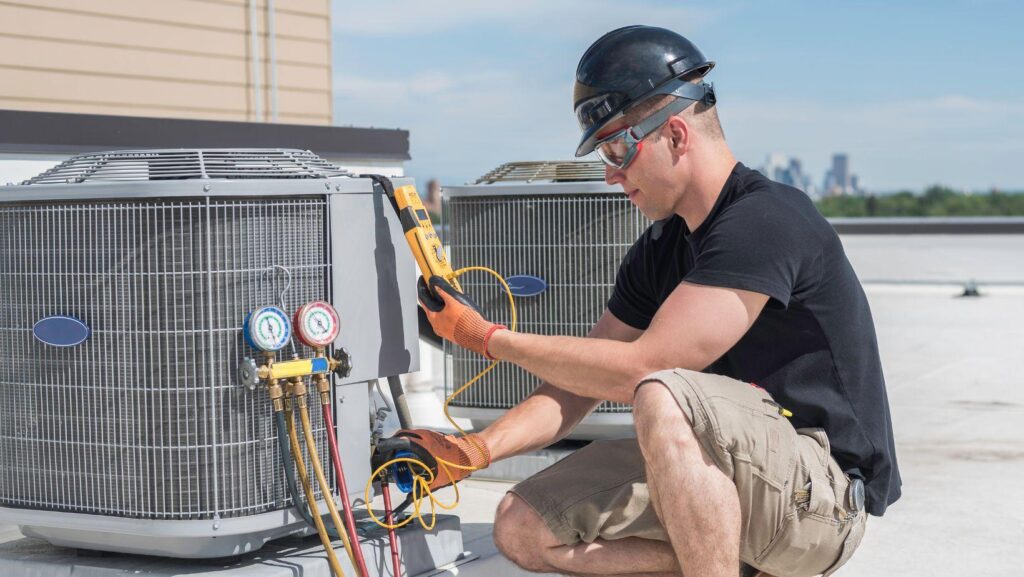
There’s a particular kind of stress that comes from your AC dying in July or your furnace quitting in January. You need someone fast, but you also don’t want to end up with a company that patches the immediate issue and disappears, leaving you to call someone else in six months. That’s really the difference between a one-off repair outfit and a genuinely full-service HVAC company, and it’s worth understanding before you’re standing in a hot house scrolling through search results in a panic.
What “Full-Service” Actually Means
The term gets thrown around a lot, so it helps to define it plainly. A full-service HVAC company handles installation, repair, and ongoing maintenance, ideally for both heating and cooling systems, and often for ductwork, thermostats, and indoor air quality equipment too. That’s different from a technician who only does repairs, or a company that installs new systems but subcontracts out the maintenance work.
Why does this matter to you as a homeowner? Because a company that only sees your system once, to fix one specific problem, doesn’t have the same incentive or knowledge base as one that’s been tracking your unit’s performance over years. They know your system’s history, your home’s quirks, and can usually spot a developing issue before it becomes an emergency repair.
The Initial Consultation Should Tell You a Lot
Pay attention to what happens before any work starts. A company worth hiring will typically send someone out to actually inspect your system rather than quoting blind over the phone. They’ll ask about your home’s square footage, insulation, how old your ductwork is, and what problems you’ve noticed. If you’re dealing with uneven temperatures between rooms or unusually high energy bills, a thorough technician treats that as diagnostic information, not just background noise.
This is also the point where you should ask about their range of services. If you’re comparing providers, a genuine Full-Service HVAC Company should be able to walk you through everything from routine tune-ups to full system replacements without redirecting you to a different outfit for half the work. That continuity matters more than people expect, especially when something goes wrong two years down the line and you want someone who already knows your setup.
Licensing, Certification, and Insurance Aren’t Optional Extras
Ask directly whether their technicians are NATE-certified (North American Technician Excellence) or hold equivalent state certifications. This isn’t just a resume line. HVAC systems are more complicated than people assume, involving refrigerant handling, electrical work, and combustion safety for gas furnaces. A poorly executed installation can shorten a system’s lifespan by years or create carbon monoxide risks in gas-heated homes.
The ENERGY STAR program, run jointly by the EPA and Department of Energy, sets efficiency benchmarks that many manufacturers design their equipment around. A company that’s well-versed in ENERGY STAR standards will generally steer you toward equipment sized correctly for your home rather than upselling something oversized, which is a surprisingly common and costly mistake.
Sizing Matters More Than Brand Names
One of the biggest red flags in this industry is a contractor who quotes you a system size without doing a proper load calculation. Bigger isn’t better here. An oversized air conditioner cools a room quickly but doesn’t run long enough to properly dehumidify the air, which leaves your home feeling clammy even when the temperature reads comfortable. An undersized furnace, meanwhile, runs constantly and wears out faster.
Ask if they perform a Manual J load calculation, which is the industry-standard method for determining the right system size for your specific home. If a company skips this step entirely and just matches your old unit’s tonnage without evaluating your current insulation and window situation, that’s worth questioning.
What Maintenance Plans Should Actually Include
Most full-service companies offer maintenance agreements, and they’re generally worth it, but the details vary a lot. A solid plan should include seasonal tune-ups (typically spring for AC, fall for heating), filter changes or reminders, coil cleaning, refrigerant level checks, and a written summary of your system’s condition after each visit. If a maintenance plan is vague about what’s actually performed at each visit, ask for specifics before signing anything.
Standards published by ASHRAE, the professional society that sets much of the technical groundwork for HVAC engineering in North America, emphasize that regular maintenance directly extends equipment life and preserves efficiency ratings. A company that takes maintenance seriously tends to reference these kinds of standards, even informally, rather than treating tune-ups as a sales pitch for a new system.
Get Everything in Writing
Verbal estimates are a trap. Before any work begins, you should have a written quote that breaks down labor, equipment, permits if applicable, and any warranty terms. Warranties are particularly important here because HVAC systems typically carry both a manufacturer’s warranty on parts and a separate labor warranty from the installing company. If the company’s labor warranty is noticeably shorter than industry norms (some offer just one year while others offer five or ten), that’s a signal worth factoring into your decision, even if their upfront price looks competitive.
Think About the Whole Home, Not Just the Unit
If you’re already investing in HVAC upgrades, it’s worth zooming out to the rest of your home décor and furniture plans, especially if a new system means relocating vents, adding a smart thermostat, or reconfiguring a room layout around updated ductwork. Homeowners sometimes treat HVAC as a purely mechanical decision, but it interacts with how your living spaces actually feel day to day, from airflow near seating areas to noise levels near bedrooms.
Questions Worth Asking Before You Sign Anything
A few direct questions tend to separate the companies worth hiring from the ones to avoid. How long have your technicians been with the company? Do you offer financing, and if so, what are the actual terms? What happens if the installed system underperforms after 30 days? A company confident in its work will answer these without hesitation, and often without you needing to ask twice.
Wrapping It Up
Hiring an HVAC company shouldn’t feel like a gamble, even though it often does when you’re dealing with a broken system under time pressure. Slow down enough to ask about certifications, sizing calculations, and what maintenance actually covers. A company that treats your home’s comfort as an ongoing relationship, rather than a single transaction, is generally the one worth trusting with something as central to daily life as your heating and cooling.