Most people overthink starting a garden. They buy too many things, plant too much at once, and then wonder why half of it is dead before August. A garden that looks after itself comes down to three decisions made well at the start: what you grow, what you grow it in, and how you water it.
The Plants That Won’t Let You Down
Start with herbs. Basil, mint, chives, and rosemary grow fast, recover quickly, and give you something useful within weeks of planting. The one catch with mint is containment; keep it in a separate pot or it will crowd out everything else in the bed by midsummer. That is not a warning most seed packets include, and it is one of the more reliable ways to lose a container arrangement in the first season. Courgettes and cherry tomatoes are the most forgiving vegetables for beginners, but for different reasons. Courgettes are productive almost regardless of what you do to them; cherry tomatoes require consistent watering but reward it with continuous fruit from early summer. The difference matters if you travel or have irregular weeks, because a courgette left unwatered for four days is usually fine, and a cherry tomato in a terracotta pot on a south-facing balcony is not. Sunflowers are worth growing the first season for the confidence boost, and they make a patchy garden look intentional while everything else is still finding its feet.
Soil: The Part Most Beginners Skip
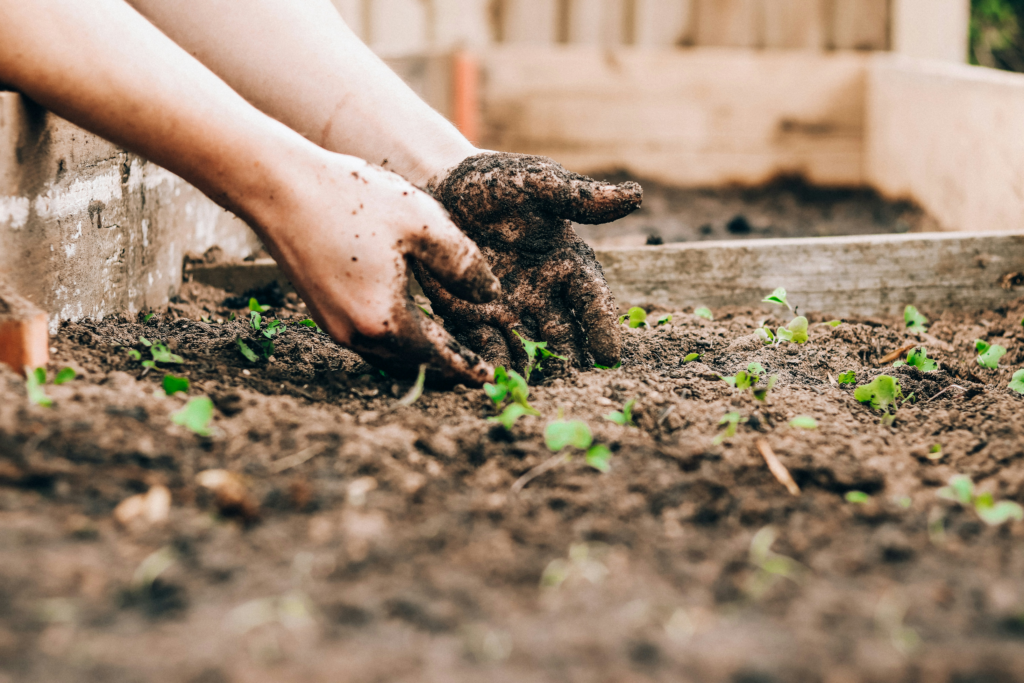
Container mixes that list only “compost” as an ingredient compact over time and start holding moisture at root level longer than most plants want; adding perlite when you pot up, or buying a mix that already contains it, keeps drainage open through the whole growing season. That single detail explains a lot of unexplained plant losses in containers. For in-ground planting, two bags of organic compost dug through the bed before anything goes in is enough to improve drainage and structure in most garden soil. The test: squeeze a handful of prepared soil. It should hold its shape briefly, then crumble. A tight clump that holds means drainage problems later. Tomatoes and courgettes grown in containers exhaust the nutrients in their compost within six to eight weeks; a weekly liquid tomato feed from midsummer is not optional if you want them to keep producing when they would otherwise slow. Useful guides, information and courses are readily available from the Royal Horticultural Society.
Watering Without Overthinking It
Tomatoes split from a sudden glut of water after a dry week, not from drought; that distinction matters because it changes when you need to pay attention. Most container plants want water when the top inch of compost is dry, not on a fixed daily schedule. Learning that rhythm in the first few weeks is more useful than any equipment you can buy. Direct water at the base of the plant, not the leaves, and do it in the morning. Wet foliage overnight is what starts fungal problems on courgettes, and most beginners put those losses down to bad luck rather than watering time. Self-watering pots are worth the cost if you have irregular schedules. One fill covers three to four days for most plants; that removes the daily check-in pressure that causes inconsistency in the first place.
Choosing Seeds: Where to Source What You Grow
Garden centres carry reliable seed stock but a narrow range. Most cycle through the same dozen or so varieties each season, which is sufficient for a first year but limiting once you want something specific. Online specialist retailers carry heritage vegetable varieties, specialist herbs, and, for growers in legal states, specialty plants including cannabis. If the terminology is unfamiliar, understanding what are regular cannabis seeds is a sensible starting point before choosing a seed type. For UK container and outdoor growing, look for varieties labelled “compact,” “patio,” or “bush.” Courgette “Patio Star” and tomato “Tumbling Tom” are both bred for container conditions and consistently outperform standard varieties in smaller spaces and shorter seasons.
The outdoor and gardening section covers raised bed and container setups that complement the planting choices here.
What the First Season Actually Teaches You
A first garden tells you things a guide cannot: how many hours of direct sun your space actually gets in July, how fast a terracotta pot loses moisture compared to a plastic one, which plants the local slugs find first. None of that travels from someone else’s setup to yours. A short note at the end of the season about what worked and what didn’t is worth more than any pre-season planning, because the second year runs on what the first one cost you.