The best fencing material depends on what the fence needs to do. Solid wood or vinyl panels generally work best for full privacy, chain link provides an affordable boundary for pets, ornamental iron preserves open views, and steel panel fencing combines privacy with low-maintenance durability. In Seattle, drainage, wet soil, gate use, maintenance, and long-term cost should influence the decision as much as appearance.
No single material fits every property. Homeowners should compare privacy, pet security, upkeep, visibility, and daily use before choosing a fence.
Fencing Materials at a Glance
| Fencing Material | Privacy Level | Pet Use | Routine Maintenance | Common Backyard Fit |
| Wood | High with solid panels | Good when gaps and ground clearance are controlled | Periodic cleaning and finish maintenance | Privacy yards and decorative designs |
| Vinyl | High with privacy panels | Good for enclosed family yards | Occasional cleaning | Low-maintenance privacy |
| Chain link | Low without privacy additions | Practical for dog runs and boundaries | Minimal | Budget-conscious and utility areas |
| Ornamental iron | Low | Depends on spacing and pet size | Limited routine maintenance | Front yards, pools, and open views |
| Steel panel | High | Good with secure gates and limited ground gaps | Low | Modern privacy and long-term durability |
| Hog wire | Low | Useful when panel openings suit the pet | Wood-frame maintenance may be required | Gardens, open landscapes, and visible boundaries |
Wood Fence: Natural Beauty With Regular Maintenance
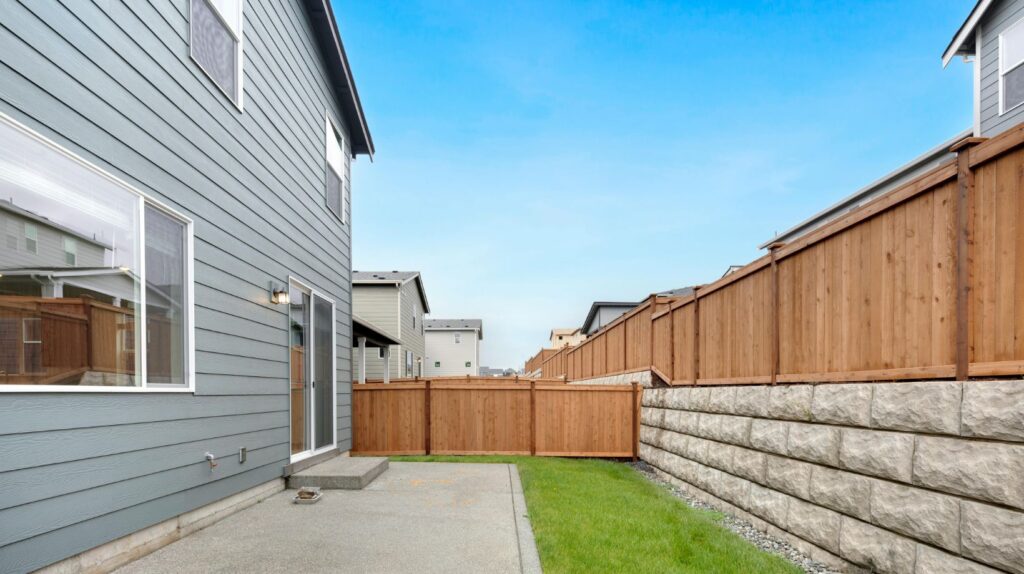
A wood fence remains a popular choice for privacy because solid panels provide strong coverage and a warm, natural appearance. Cedar is naturally resistant to insect damage and decay. It can be installed in full-panel, horizontal, rambler, and other decorative styles, giving homeowners more control over privacy and curb appeal.
The trade-off is ongoing maintenance. Wood fencing may have a lower cost at installation than several low-maintenance alternatives, but it still needs periodic cleaning and finish maintenance. Untreated wood and worn finishes are more vulnerable to moisture-related damage. The staining or sealing schedule depends on the wood species, coating, exposure, drainage, and manufacturer guidance. Without regular upkeep, discoloration, warping, mold, and decay become more likely.
For homeowners who value natural beauty and design flexibility, wood can still be the right fence material. The long-term budget should account for cleaning, staining or sealing, and possible board replacement.
Vinyl Fencing: Privacy With Minimal Upkeep
Vinyl fencing is a reliable option for homeowners who want solid privacy without staining or painting. Routine surface maintenance usually consists of periodic cleaning, although gates and hardware still need occasional inspection.
Vinyl typically has a higher initial cost than a basic wood fence, but it can provide a long service life when the posts, rails, panels, and gates are installed correctly. It is not vulnerable to insects or wood rot and does not absorb moisture in the same way as natural wood.
Because vinyl is a plastic-based material, homeowners comparing environmental impact should look beyond maintenance alone. Product-specific information about recycled content, expected service life, cleaning chemicals, and end-of-life options can help determine whether a particular system supports a more sustainable purchase.
The main consideration is aesthetics. Some homeowners prefer real wood, while others appreciate the clean, consistent appearance of vinyl. For pools, pet areas, and busy family yards, its minimal maintenance can be a strong advantage.
Chain Link Fencing: Cost-Effective Pet Security and Privacy Screens
Chain link fencing is a budget-friendly option for pet boundaries, side yards, and utility areas. It offers security, visibility, and a practical boundary for pets without blocking the entire yard. Its lower cost can also make it practical for longer fence runs.
Its biggest limitation is minimal privacy. Privacy screens or slats can improve coverage, though they change the appearance and may add cost. Chain link is not usually chosen for natural beauty, but it remains functional and durable.
For side yards, dog runs, utility areas, or properties where visibility matters, chain link can be the most cost-effective choice.
What Makes a Fence Practical for Pets?
Material is only one part of pet safety. Homeowners should also evaluate fence height, the size of openings, clearance beneath the fence, gate latches, post stability, and the areas where pets are most likely to dig or push against the boundary. A well-planned layout can help protect pets from gaps, weak gates, and digging points that could allow an escape.
Solid wood and vinyl panels can reduce visual distractions for reactive dogs. Chain link maintains visibility and creates a clear boundary, but some yards may need a bottom tension system or a pressure-treated anti-dig board near the ground. For everyday safety, gates used several times each day also need stable posts and hardware that can be adjusted if the gate begins to shift.
Ornamental Iron, Steel Panel, and Hog Wire Fencing
Ornamental iron fencing works well in front yards and other areas where security, decorative appearance, and open sightlines matter. It may also suit pool areas when the complete barrier meets applicable requirements for height, openings, gates, and latches. It does not provide full privacy, and the spacing between components should be considered when the fence will contain small pets.
Steel panel fencing may appeal to homeowners seeking solid privacy, a modern appearance, enhanced durability, and less finish maintenance than natural wood. Long-term performance still depends on the posts, panel system, protective finish, gate design, installation quality, and site drainage. Although metal components are noncombustible, a complete fence should not be treated as fully fire-resistant without considering its coatings, gates, adjacent vegetation, and any combustible components.
Hog wire fencing keeps views open while defining gardens, pet areas, and property boundaries. It is not a full-privacy option, and the panel openings must be appropriate for the animals the fence is expected to contain.
Choosing the Right Fence Material for Seattle Conditions
Seattle’s moisture makes resistance to mold, mildew, rot, and warping especially important. Homeowners comparing local fencing options in Seattle should consider drainage, sun exposure, soil conditions, gate placement, and how much maintenance they realistically want. Even a moisture-resistant material can develop problems when runoff collects near posts, vegetation traps moisture, or the fence layout limits airflow.
The surrounding environment should also guide fence placement. Dense vegetation, shaded corners, roof runoff, and limited airflow can keep some sections damp longer than open areas.
In Seattle, fences up to 8 feet high generally do not require a construction permit when masonry or concrete elements remain at or below 6 feet. However, zoning typically limits fences to 6 feet in neighborhood residential and multifamily zones and to 4 feet in front or street-side setbacks. Flood-prone sites and other special conditions may require additional review.
A contractor offering professional fence design and installation can help compare materials, layout, posts, and long-term upkeep before work begins.
The best choice depends on the main priority. Solid wood or vinyl works well for privacy, chain link provides an economical pet boundary, ornamental iron supports security without blocking views, hog wire suits open landscapes, and steel panels provide privacy with a modern appearance.
The final decision should account for a range of site and household factors, including drainage, gate frequency, pet behavior, maintenance expectations, and the condition of the installation area. Before investing in a fence project, homeowners should compare the purchase price with maintenance demands, repairability, gate hardware, and expected long-term performance.